
About Raise Studio
An Independent Dev Team Focused on SME Digitalization
Raise Studio is an independent development team dedicated to the digital transformation of small and medium-sized enterprises. We follow a "small yet beautiful" product philosophy — we don't pile on features; we build software that's genuinely good to use.
We build custom web applications, mini-programs, and desktop tools for businesses, covering scenarios from appointment booking and ticket management to fund disbursement and security control. We develop productivity plugins for WordPress, VS Code, and browsers, and provide enterprise-grade admin frameworks, low-code platforms, and private knowledge bases.
Technically, we master mainstream stacks — PHP (ThinkPHP / Laravel), Python (AI · automation · data), and Java (Spring Boot / Spring Cloud). Guided by our goal of "letting technology truly serve the business," we provide SMEs with full-lifecycle digital support — from consulting, development, and training to operations — turning controllable cost into sustainable digital capability.

Our product
We create dedicated software to do the heavy lifting for you - whether you are a developer, learner, or buyer.
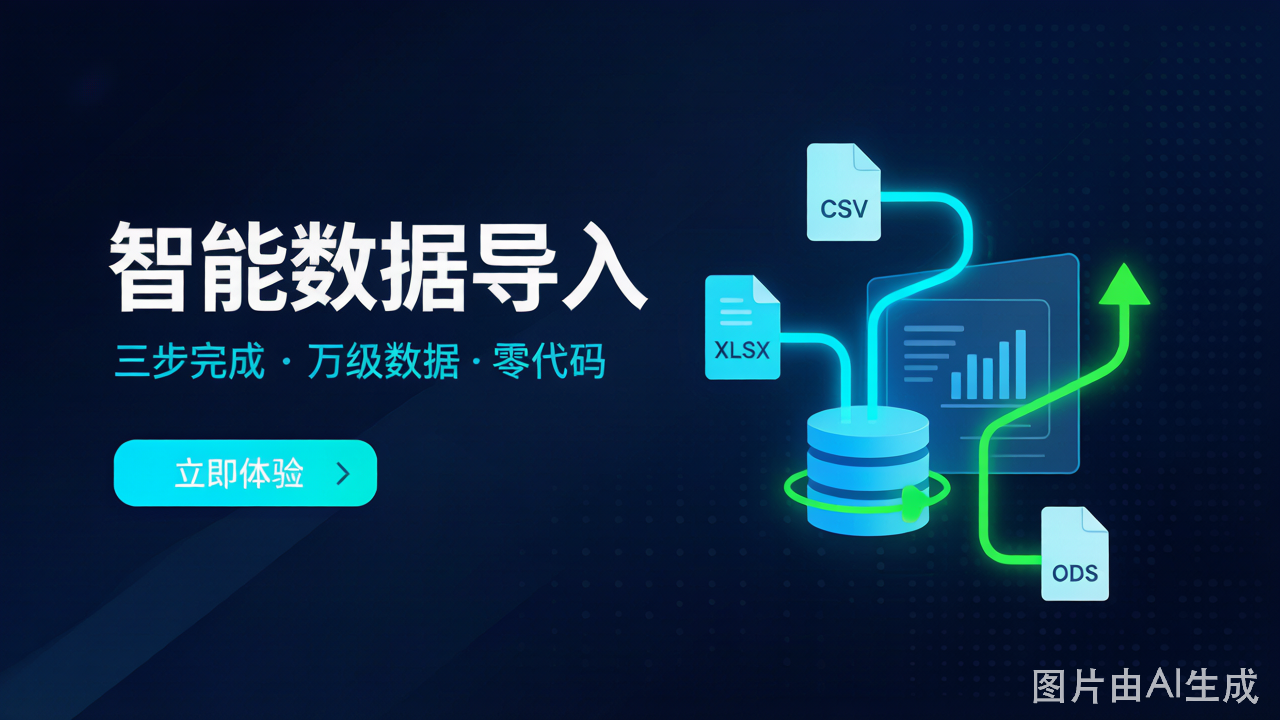
Import for Filament
The simplest and most user-friendly Filament CSV/Excel import plugin; tens of thousands of rows of data can be imported in seconds. Automatic column mapping, row-level validation, duplicate processing, and dark mode — all integrated into an elegant 3-step wizard.
Learn more →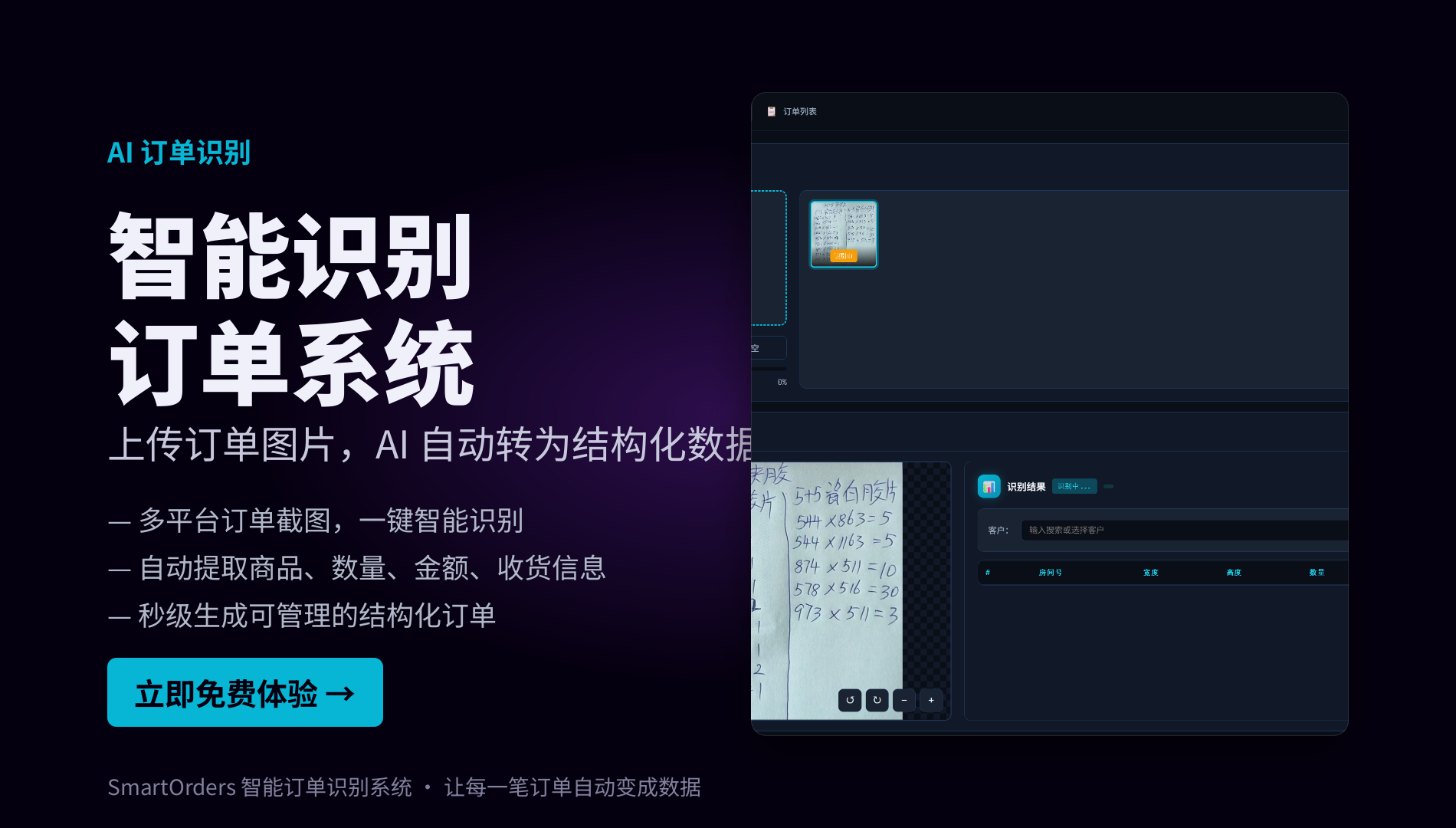
智单通 SmartOrder AI
The multimodal AI Agent based on the MCP protocol turns every handwritten order into precise data, speeding up order processing by 80%.
Learn more →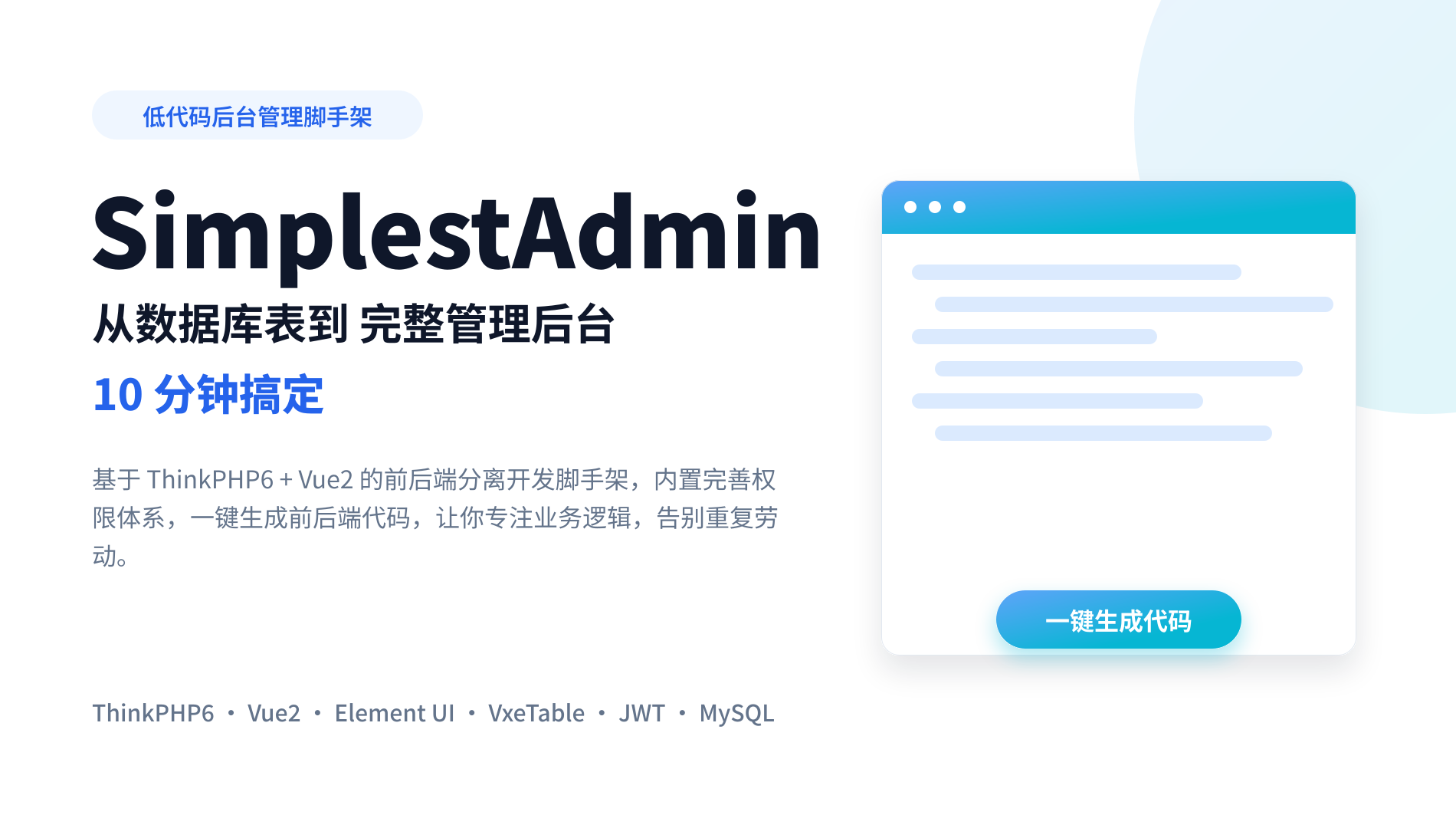
Simpplest Admin v2
Based on the minimalist low-code framework of ThinkPHP + Vue, the database tables automatically generate front-end and back-end code, enabling even non-technical personnel to quickly set up the system.
Learn more →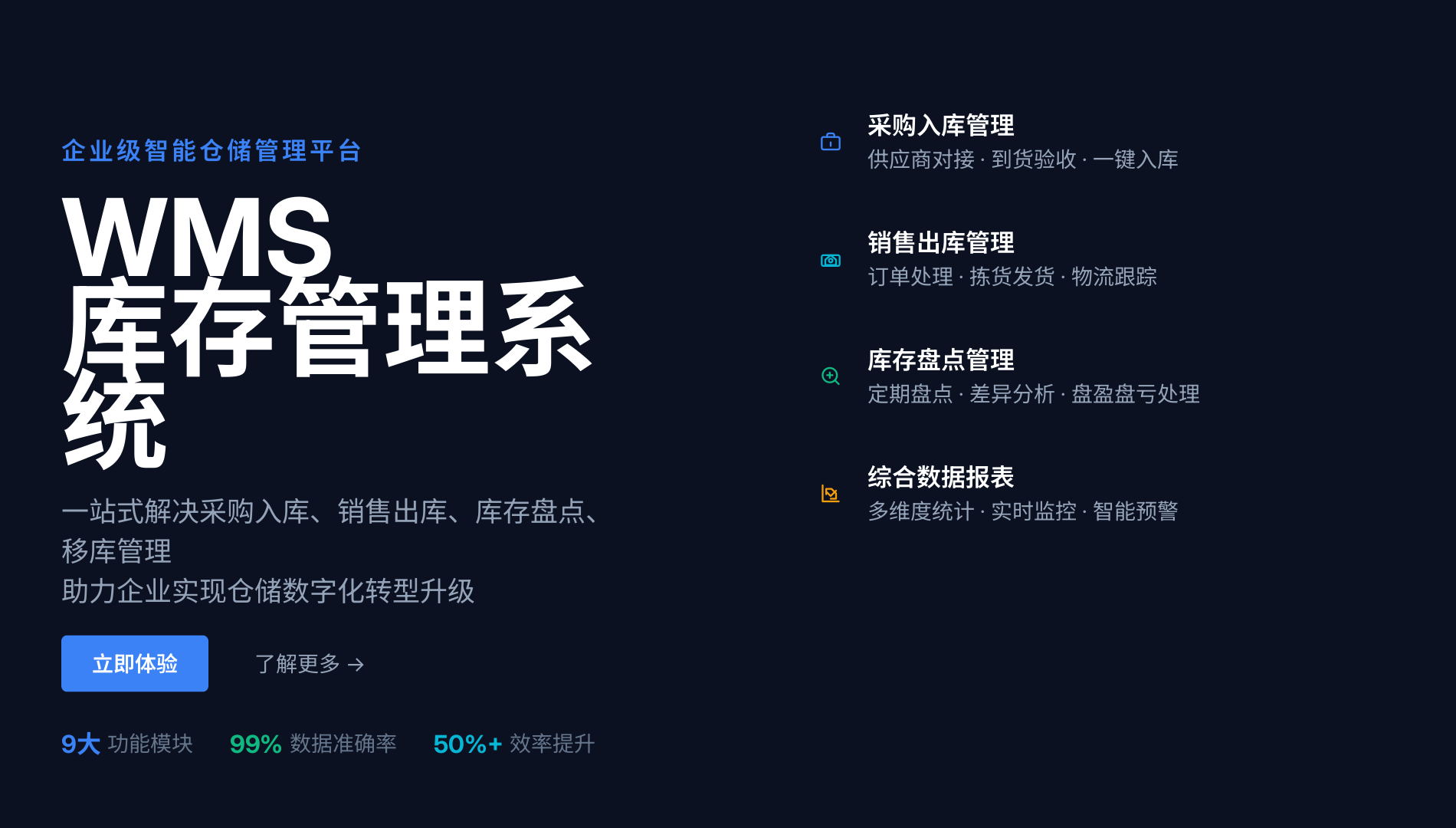
简单库存管理系统
For inventory management systems targeted at small and medium-sized enterprises, no training is required, and you can start using it right away without any foundation!
Learn more →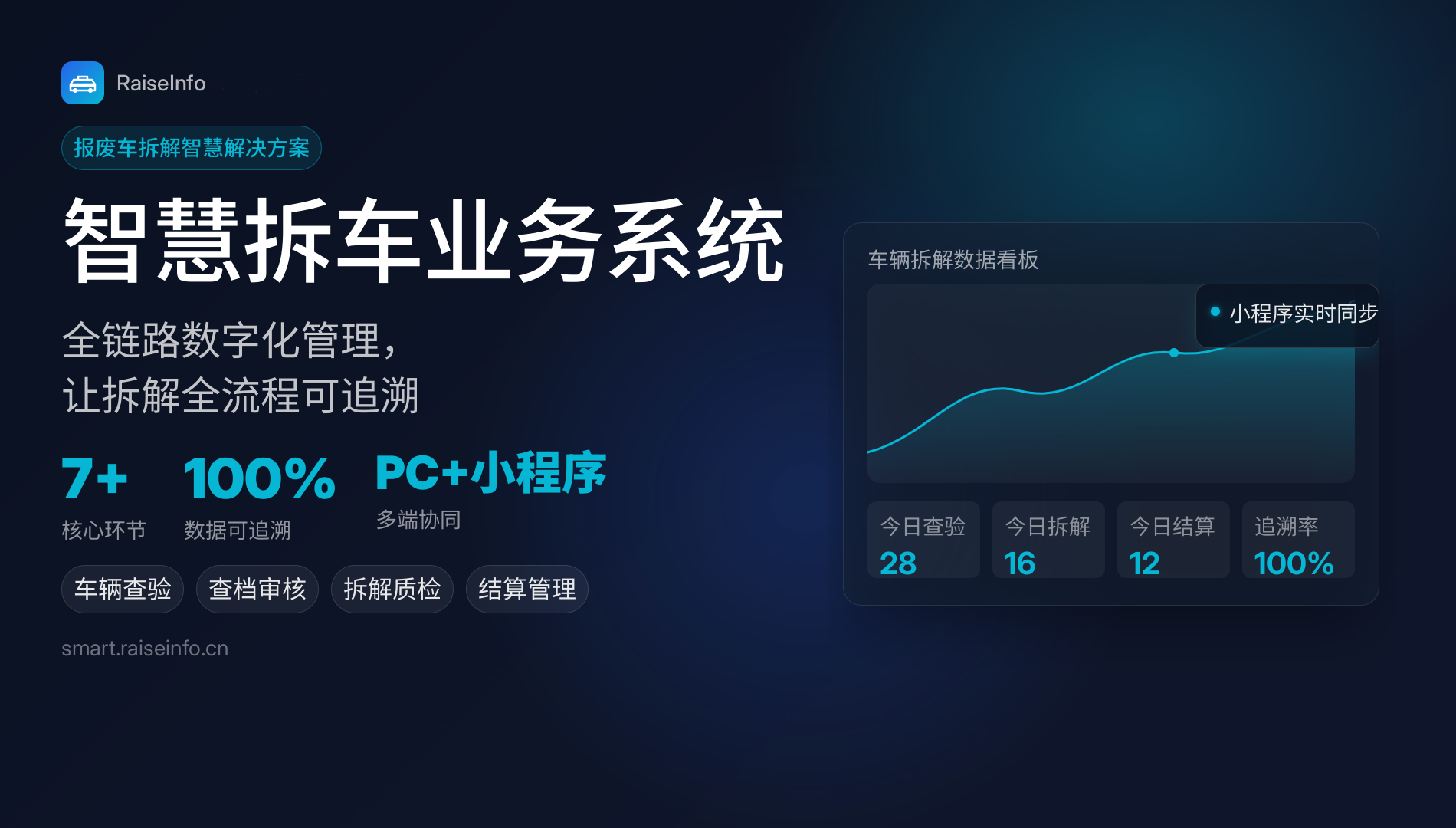
智慧拆车系统
A comprehensive digital management platform tailored for the renewable resources industry, enabling online management of work orders, parts, inventory, and finance across the entire process, facilitating the shift of vehicle dismantling operations from being experience-driven to data-driven.
Learn more →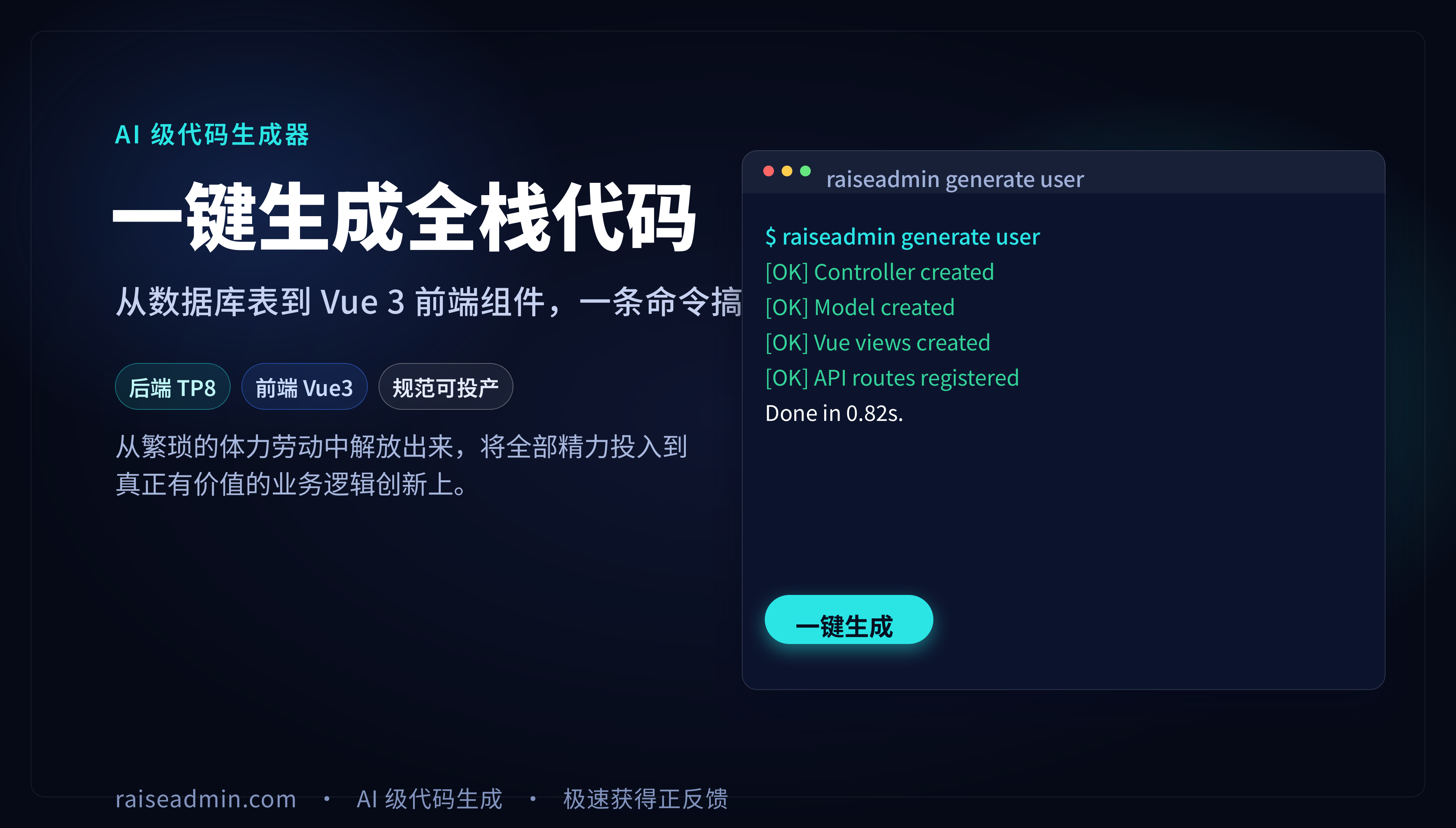
Raise Admin
Raise Admin management system, an enterprise-level full-stack automated generation framework. It integrates a built-in JWT + RBAC permission system, enabling one-click output from the database to the Vue3 frontend, redefining efficient development.
Learn more →News
Product updates, research and development progress, and industry observations.
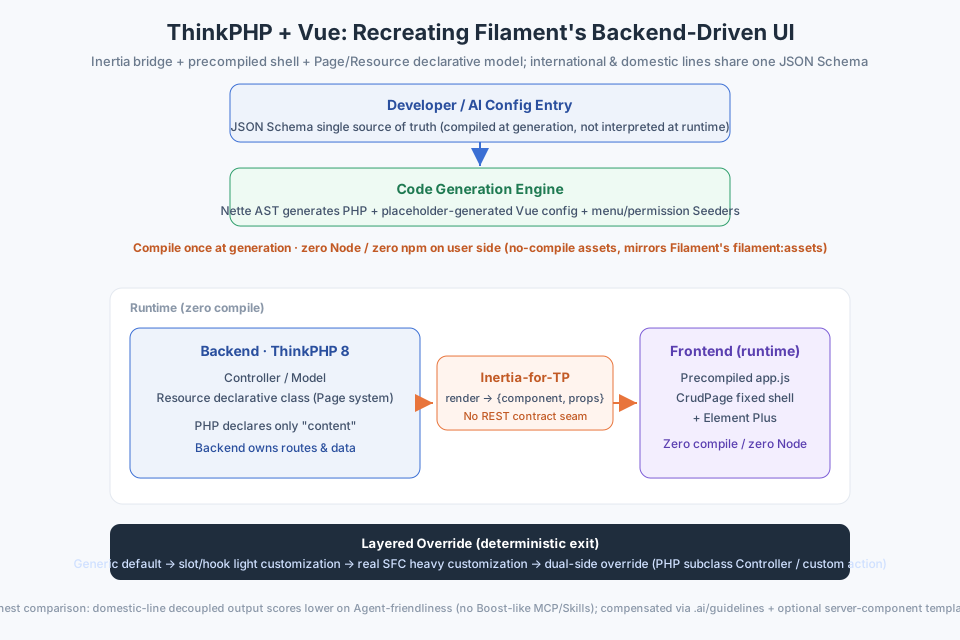
ThinkPHP Can Be This Smooth Too — Recreating the Filament Experience with ThinkPHP + Vue
In the first two articles, we used Laravel + Filament to argue that "server-driven UI is more friendly to AI." We showed the formula, the scoreboard, the five pillars, and the dogfooding loop. But a practical problem stands in the way of declaring victory: a large number of domestic teams' primary framework is ThinkPHP, not Laravel. Many Chinese engineering organizations have a decade of ThinkPHP muscle memory, a thick layer of in-house ThinkPHP libraries, and hiring pipelines built around it. Does that mean the dividend of "not separating by default" is locked to a framework — that you must abandon your stack to get the AI-friendly architecture? This article gives a clear answer: the dividend belongs to the architecture pattern of "declarative, backend-driven UI," not to any specific framework. We recreate the Filament experience with ThinkPHP 8 + Vue 3, and honestly state: on "Agent friendliness," the domestic line does have a gap, but the gap is bridgeable, and the framework risk has been reduced in dimensionality. By the end you should see that the principle we have been building is portable, and that portability is itself the safety net.
Read more →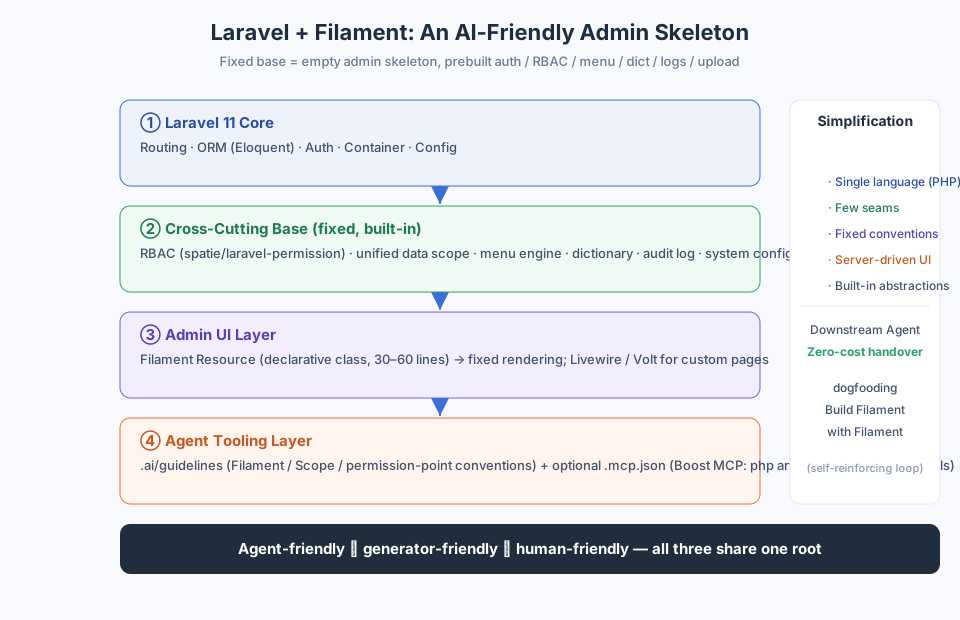
Laravel + Filament: Why It Is the Most AI-Friendly Admin Skeleton
In Part One we set a thesis: in the Vibe Coding era, the default should not be frontend-backend separation, but rather "single-language + server-driven UI." We backed it with a formula — Agent output quality is inversely proportional to the product of languages, seams, and structural uncertainty — and with a scoreboard showing server-driven forms pulling far ahead of separated ones. The skeptic will say: "But my team already separated, and it works." That is true for human teams, and Part One already conceded the organizational cases where separation earns its keep. This article is not about those teams. It is about the moment an AI is the one generating and maintaining the code — because in that moment, the human-coordination rationale for separation dissolves, and a new efficiency curve appears. What follows is a concrete instance of that curve, using tools you can stand up today. But a thesis needs a body. For an idea to be useful, it needs a concrete, reusable skeleton an engineer can actually stand up on a Monday morning. This article uses Laravel + Filament as a case study to answer one question: why is it precisely this combination that is most friendly to AI (and, as we will see, to humans)? The answer is not in some flashy feature, but in a chain of architecture decisions that "subtract": single language, fewer seams, fixed conventions, server-driven, built-in abstractions. Stacked together, they drive the Agent's "cognitive load" to its lowest point. We will look at the skeleton itself, decompose the five simplifications, examine how it becomes genuinely AI-native, and close with the dogfooding loop that makes the whole thing self-sustaining.
Read more →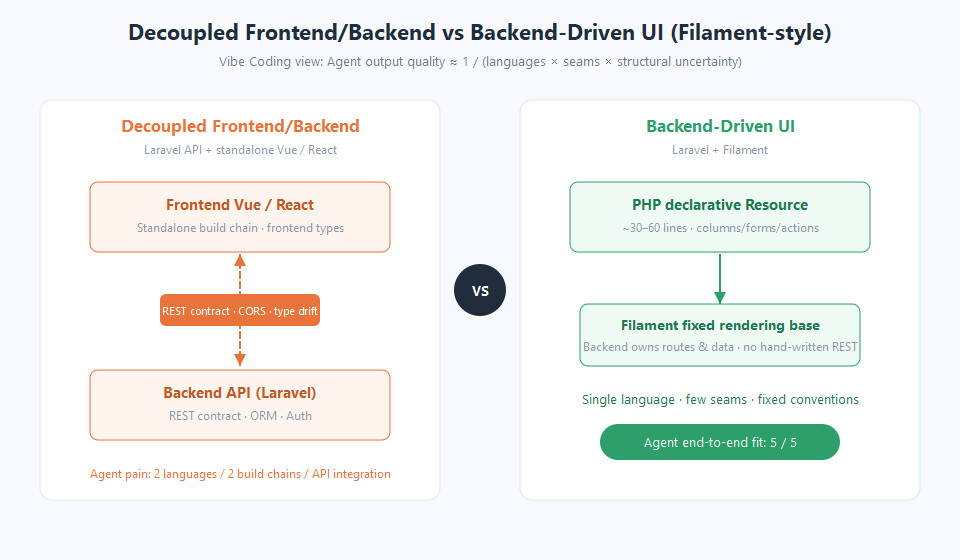
When AI Starts Writing Code, Should Frontend-Backend Separation Still Be the Default?
For the past decade, "frontend-backend separation" has been the undebated, default starting point for web applications. A frontend repo here, a backend repo there, joined by a REST / OpenAPI contract in the middle — this combination became muscle memory for countless teams. It was a reasonable response to a real problem: as apps grew, letting interface specialists and server specialists work in parallel, in their own stacks, with their own release cadences, simply scaled better than cramming everyone into one monolith. But now that Vibe Coding (AI-assisted end-to-end code generation) has entered our daily work, we have to pull that muscle memory back out and examine it under new light. The premise of Vibe Coding is that an AI Agent can act as the "lead engineer" and generate a working application from a prompt — scaffolding, routes, models, UI, and all. When the same intelligence is responsible for *both* sides of the contract, the organizational justification for separation weakens, and a different set of constraints comes to the front. In a scenario where an AI generates the entire application from scratch and is expected to actually run it, is separation-by-default still the optimal choice? This article's conclusion is clear: not necessarily. At least for a large category of scenarios — admin panels, internal systems, and standard CRUD — the more robust first principle in the Vibe Coding era is "single-language by default + server-driven UI." That is a strong claim, so the rest of this article builds it up step by step: first the constraints an AI Agent actually fights against, then why classic separation makes all of them worse, then why full-stack integration makes them better, then a side-by-side scoreboard, and finally an honest account of where separation still earns its keep.
Read more →Contact Us
Got an idea, a half-finished spec, or just a nagging feeling that your current tools aren't pulling their weight? We'd love to hear about it. Since 2017 we've helped hundreds of small and mid-sized teams turn rough ideas into software that actually ships — and we answer every message within one business day. Tell us what you're building; the first conversation is always free.
Contact Us